Capability · Claim Intelligence
Consistent merit checks, from day one.
Not every claim should proceed, and it’s better for clients to know early. Claim Intelligence assesses eligibility and merit against Financial Ombudsman upheld outcomes and your own data, applies the same rules consistently across the book, and flags weak claims and missing evidence early. A fee earner signs off every decision.
What firms running Claim Inbox are seeing
- Time reduction
- 96%
- Same-team capacity
- 27×
- Fee-earner sign-off
- 100%
What it does
Which claims should move, and which shouldn’t.
The judgement a fee‑earner makes on every file, applied consistently across the whole book, with the reasoning shown.
Assess eligibility
The claim criteria applied the same way to every case, not case‑by‑case guesswork that drifts as the book grows.Score the merit
The strength of a claim weighed against comparable outcomes, so the borderline cases are visible rather than assumed.Ground it in FOS outcomes
Assessments anchored in Financial Ombudsman upheld decisions: a recommendation you can trace back to the reasoning.Catch the weak claims early
The cases that won’t stand flagged before they consume cost, funder time and a place in the tranche.Surface what’s missing
The evidence, signature or field a claim needs to progress, made visible while there is still time to get it.Prioritise the book
The strongest, most complete claims surfaced to move first: the queue ordered by what will actually land.
How does it work
Gather, assess, flag;
then a person decides.
Gather
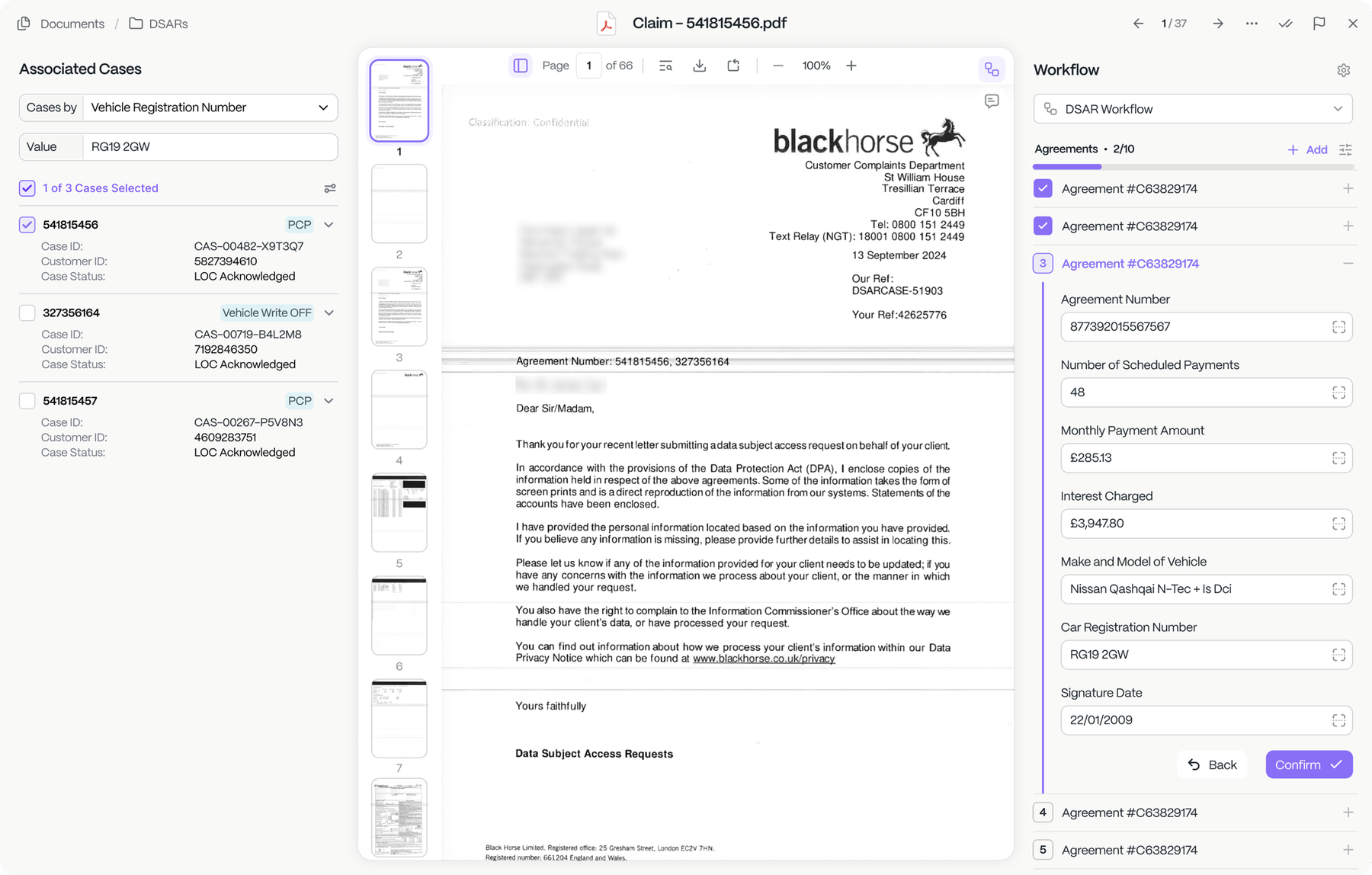
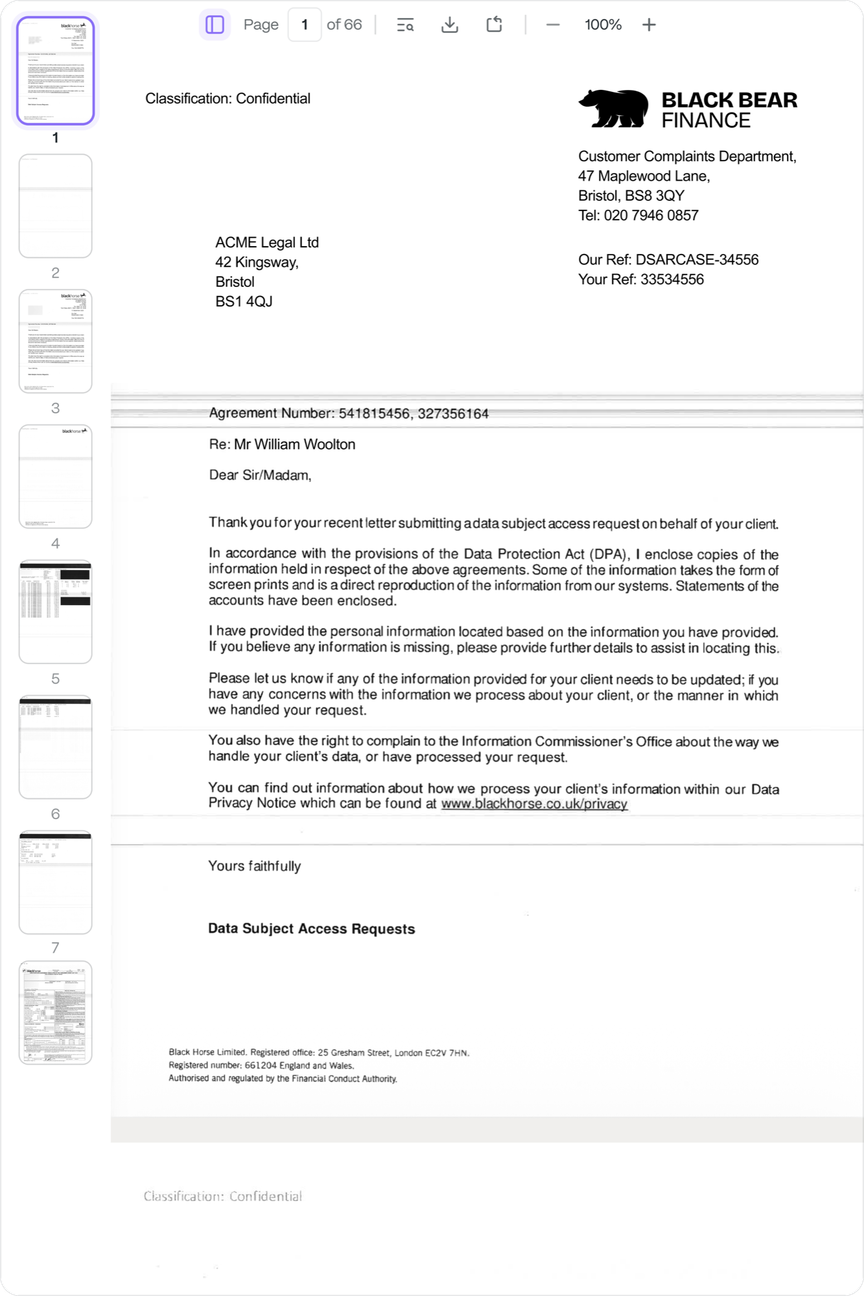
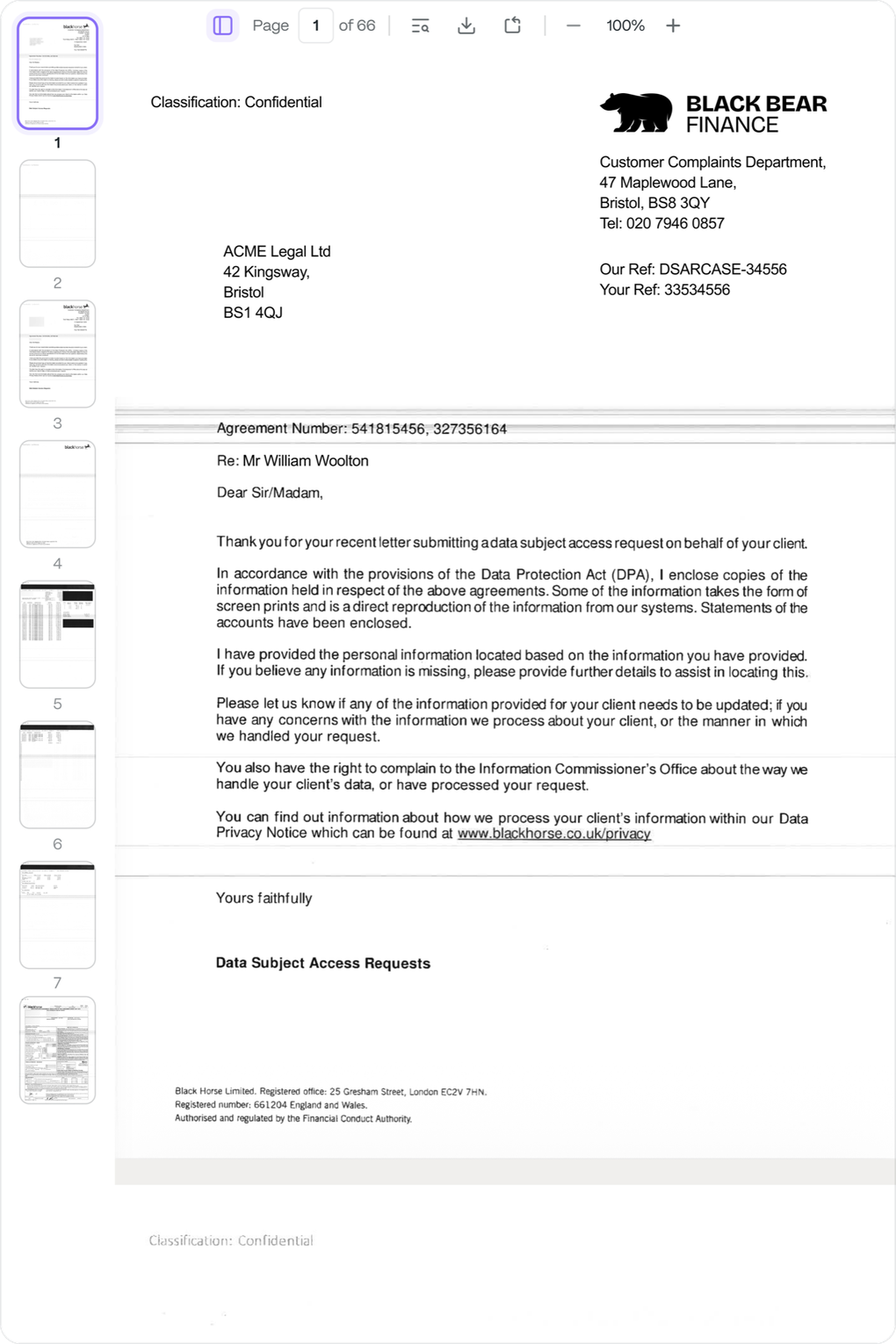
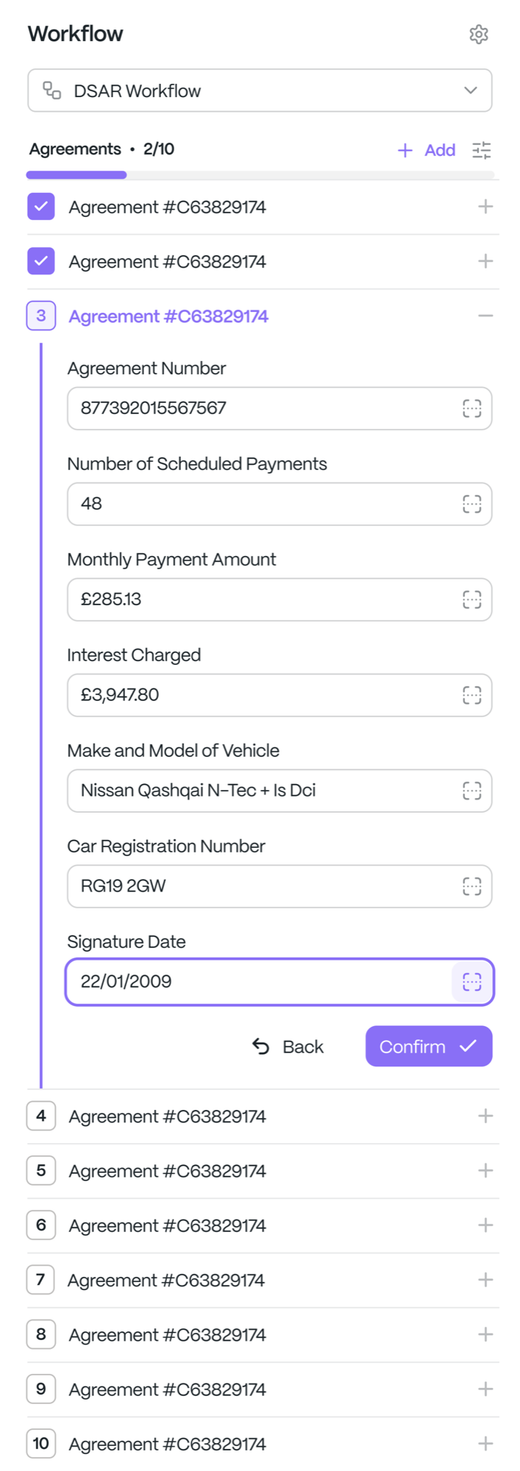
The file’s facts pulled together from the case system and the extracted documents, whatever the claim already holds.
Assess
Eligibility and merit weighed against the claim rules and Financial Ombudsman upheld outcomes.
Flag
The weak claims and the missing evidence surfaced early, each with the reason it was flagged.
Sign off
A fee earner reviews the recommendation and decides: the system assesses, a person makes the call.
Across claim types
One capability, every kind of claim.
PCP & motor finance
DCA and redress rules applied to each agreement, grounded in Financial Ombudsman upheld outcomes: the eligible claims separated from the rest.

Personal injury & NIHL
Audiogram and record checks run against the criteria: generate medical records and flag missing evidence early.

Housing & data breach
Class membership and eligibility criteria applied consistently across the cohort: who qualifies, and who doesn’t, made clear.

The rest of the platform
Six capabilities, one operation.
Every capability is a block in the Saber Workflow Builder; here’s the whole platform, and where you are in it.
Document Intelligence
Reads DSARs, medical and MOD records (handwritten, scanned, hundreds of pages) and extracts every field, anchored to the source.
Correspondence Processing
Inbound mail classified against the right case, the request actioned and the reply drafted: the queue that clears itself.
Client Communications
Updates, acknowledgements and query answers drafted and sent, on the file, in your voice, with a person approving each.
Claim Intelligence
You are hereEligibility and merit assessed from FOS outcomes and your own data; the right claims move, the weak ones are caught early.
Paralegal Performance
Every handler’s throughput, live: who’s flying, who’s stuck, where to coach.
Book Intelligence
Live portfolio visibility: tranche performance, where the book is stuck, what to chase.
Automate your book
with Saber.
Speak with us about your workflows: DSARs, medical records, a batch of defendant mail, a round of client updates. By the end of the week we’ll show you a demo relevant to your use case. No fee, no commitment.
Extraction you can defend
Every figure is anchored to its source page and a person approves it; nothing enters the case unchecked. Full audit trail, ISO 27001 certified, UK‑only data residency, never used to train our models.